The Illusion of Legibility
In the digital age, we often assume that if text appears on a screen, it is valid. We trust the visual representation of characters to carry the weight of meaning, argument, and fact. However, a recent case study in digital data corruption reveals a stark reality: when encoding processes fail, text ceases to be a communicative artifact and becomes a structural artifact of failure. This phenomenon is not merely a technical glitch; it is a fundamental breakdown in the relationship between data and human comprehension. By examining a heavily corrupted fragment of what appears to be a digital marketing email, we can see how easily the boundary between information and noise is crossed, and why this matters for researchers, archivists, and anyone relying on digital records.
Visual Text vs. Semantic Text
The core issue in this case study is the distinction between visual text and semantic text. A human reader or an algorithm may recognize the shape of letters, but without the underlying logical structure, meaning is lost. The fragment in question contains a string of glyphs that visually resemble language but lack the syntactic and semantic coherence required for understanding. This is not a case of minor typos or formatting errors. It represents a severe encoding damage where the data has been stripped of its communicative intent.
This distinction is critical in digital forensics and data analysis. When we look at a corrupted file, we are not looking at a broken message; we are looking at a record of data loss. The presence of isolated keywords does not restore the text’s utility. In fact, it introduces a high risk of interpretive fabrication. If a few words remain legible, there is a temptation to fill in the gaps with assumptions, projecting a coherent narrative onto a chaotic dataset. This is the danger of the “illusion of context.”
The Danger of Fragmented Clues
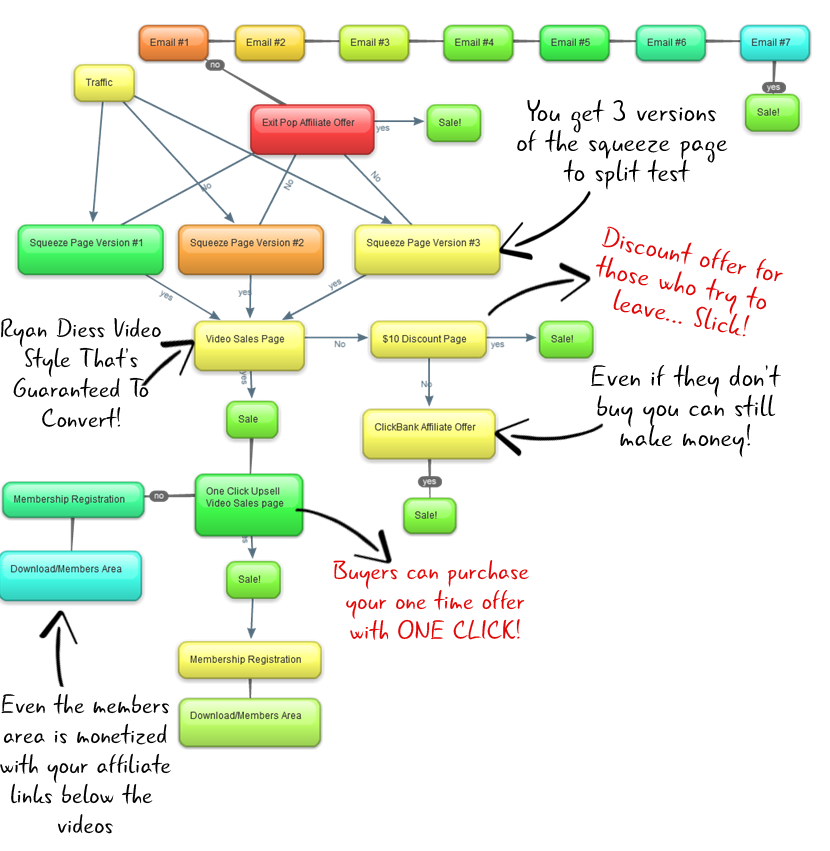
Despite the extreme corruption, certain structural elements and keywords remain discernible in the fragment. Terms such as “3 versions,” “click,” “offer,” “members,” “authorized,” “optimized,” and “affiliate” survive the encoding damage. These words suggest a promotional context, likely a direct-response marketing strategy or a tiered product structure. However, their presence is insufficient to reconstruct the original argument.
For instance, the reference to “3 versions” could imply an A/B testing strategy or a tiered pricing model, such as Basic, Pro, and Premium. But without the surrounding context, this interpretation remains speculative. Similarly, the imperative verb “click” suggests a call to action, a common feature in email marketing and affiliate funnels. The terms “members” and “affiliate” hint at a membership-based model where users are directed to third-party offers. Yet, the specific mechanics of this relationship, such as commission structures or user permissions, are obscured by the data corruption.
These keywords serve not as evidence of a specific marketing strategy, but as markers of the genre from which the text likely originated. They illustrate the types of content that are most vulnerable to corruption when encoding errors occur, particularly in automated systems that process large volumes of promotional text. The risk here is that an analyst might mistake these fragments for a complete dataset, leading to false conclusions about the original intent or audience.
The Critical Role of Metadata
A profound limitation identified in this case study is the total lack of essential metadata. The fragment provides no attribution, dates, or broader context, making it impossible to verify the origin, author, or intent of the original message. In academic and professional research, metadata is the anchor that connects data to reality. Without it, the text is an orphaned artifact.
Furthermore, the notes emphasize that the text does not distinguish between authorial claims and established facts. In a coherent document, this distinction is vital for evaluating credibility. In a corrupted fragment, the clarity required to make such a distinction is absent, rendering any attempt to assess truthfulness futile. This underscores the critical role of metadata in digital preservation. Without context, even partially legible text is of limited value. It reinforces the need for comprehensive metadata standards in digital archiving and research, ensuring that data can be traced back to its source and verified for accuracy.
Practical Lessons for Data Integrity
The primary practical application of this case study is as a cautionary example in data cleaning and text recovery exercises. It demonstrates the limits of readability when character encoding is severely damaged. For researchers, data scientists, and digital archivists, this fragment offers several key lessons.
First, data quality assessment is essential before conducting any analysis. If a significant portion of the text is corrupted, the data may be unusable for substantive research. This section serves as a benchmark for identifying when data has crossed the threshold from “noisy” to “unrecoverable.” Second, the fragment highlights the importance of validating Optical Character Recognition (OCR) outputs and character encoding standards. Severe corruption often results from mismatches between the source encoding and the processing system. Understanding these failure modes can help in developing more robust data cleaning pipelines.
Third, the fragment warns against the risk of interpretive bias. When only a few keywords are legible, there is a temptation to fabricate meaning from incomplete data. This section emphasizes the need for intellectual honesty in acknowledging the limits of what can be known from corrupted data. Finally, the lack of metadata underscores the critical role of metadata in digital preservation. Without context, even partially legible text is of limited value. This reinforces the need for comprehensive metadata standards in digital archiving and research.
Unresolved Questions and Open Limits
While the notes provide a clear assessment of the fragment’s condition, several claims remain unresolved due to the nature of the data. The specific nature of the “3 versions” referenced in the fragment remains unclear. It is impossible to determine whether these refer to product tiers, email variations, or testing iterations. Similarly, the specific mechanics of the affiliate or membership model hinted at by the keywords are obscured. The original intent of the message, including the target audience and the specific product being sold, remains unknown. The lack of metadata prevents any verification of these details.
Furthermore, the cause of the corruption is not specified. The notes identify the corruption as resulting from character substitution and encoding errors, but the specific cause, whether it was a software bug, a transmission error, or a deliberate obfuscation, remains an open question. In summary, this section provides no substantive content for synthesis into a broader nonfiction narrative. It serves instead as a record of data loss and the inherent limitations of recovering meaning from heavily corrupted digital texts. The uncertainty surrounding the specific details of the fragment remains unresolved, and no meaningful statistics or definitive conclusions can be drawn from the available fragments.