When Code Breaks, Concepts Shine
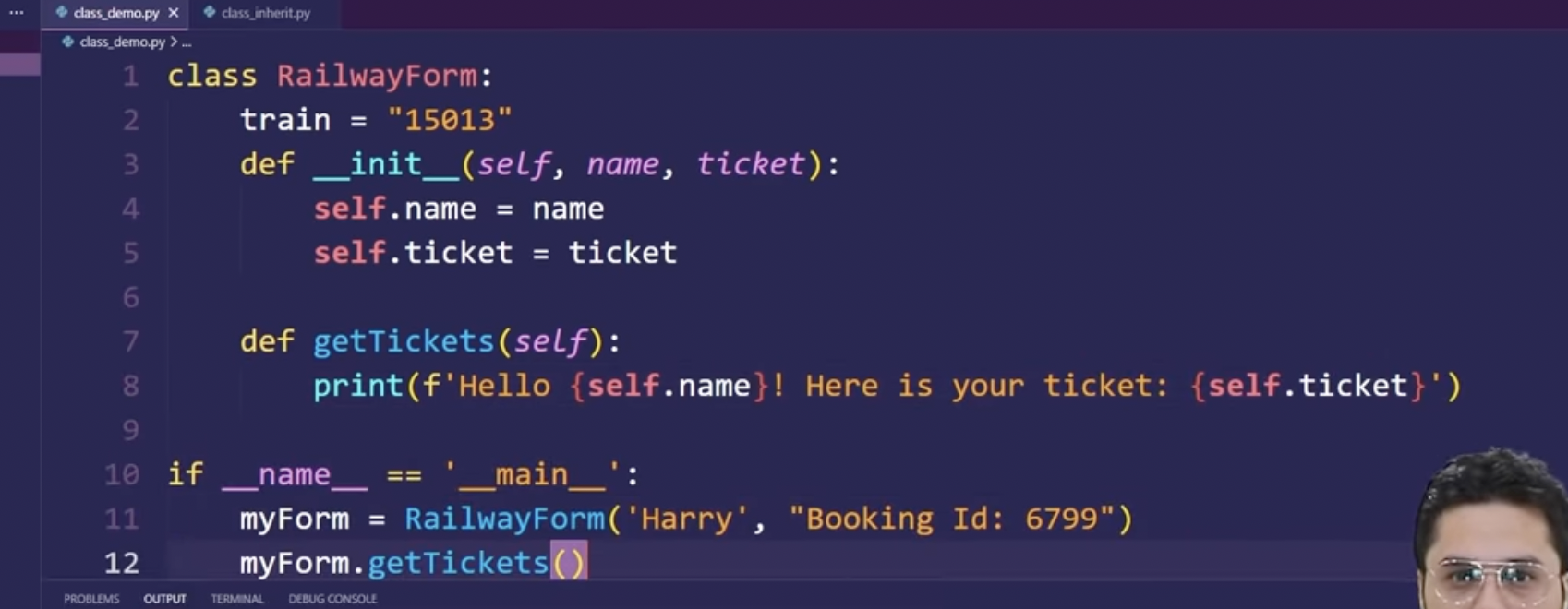
Learning to program is often less about memorizing syntax and more about understanding structure. A common pedagogical tool in Python education is the creation of a simple class to manage related data. Consider a scenario where a developer attempts to build a RailwayForm class. The goal is straightforward: bundle a passenger’s name and a unique ticket identifier into a single, manageable object. This approach mirrors how real-world systems handle transactions, grouping identity and transaction details together for coherent management.
However, the specific example often used to illustrate this concept contains critical typographical errors. The source material presents a class definition that, as written, is non-functional. It uses seLf instead of self and init_ instead of __init__. These are not minor stylistic choices; they are fundamental violations of Python’s naming conventions. In Python, self is the conventional first parameter of instance methods, serving as a reference to the specific object being manipulated. Writing seLf results in a NameError because the variable is undefined. Similarly, __init__ is a special “dunder” method that Python automatically calls when a new object is created. Replacing it with init_ creates a regular method that is never automatically invoked, leaving the object uninitialized.
Despite these errors, the underlying logic remains a powerful teaching tool. The discrepancy between the intended logic and the actual textual representation highlights a common theme in educational materials: conceptual clarity often takes precedence over syntactic accuracy. The code serves as a visual or logical guide rather than an executable script. For a beginner, the value lies not in running the code, but in tracing the flow of data through the object’s lifecycle.
Tracing the Data Lifecycle
To understand the intended functionality, we must look past the syntax errors and focus on the data flow. The example involves a passenger named “Harry” and a booking identifier string, “Booking Id: 6799”. In a corrected version of this code, the main execution block would create an instance of the RailwayForm class by passing these two values into the constructor.
The process begins with instantiation. The data is passed into the class, and the __init__ method assigns these parameters to the instance attributes using the self keyword. This step establishes the object’s initial state. The name “Harry” is stored in self.name, and the ticket string is stored in self.ticket. This separation of data storage from data presentation is a core principle of Object-Oriented Programming (OOP). The class acts as a container, holding the data securely within the object’s memory space.
Once the data is stored, a method called getTickets is defined to retrieve and display this information. This method uses an f-string to format the output. If the syntax were corrected, the console would display: “Hello Harry! Here is your ticket: Booking Id: 6799”. This output demonstrates the complete cycle of data within the object. It starts as raw input in the main program, moves into the instance attributes via the constructor, and finally emerges as a formatted string through a method call. This cycle visualizes how related data points are bundled for coherent management, allowing the developer to treat the passenger and their ticket as a single unit.
From Classroom to Production
While the RailwayForm class is too simplistic for production environments, the structural pattern it demonstrates is universally applicable. The concept of grouping related data into a class is the foundation of modern software architecture. For instance, a Customer class might bundle a name, email address, and order history. A Product class might bundle a name, price, and stock level. In each case, the class provides a framework for managing data that is inherently connected.
In real-world applications, this basic pattern is expanded to include robust validation logic, database interactions, and comprehensive error handling. The railway example lacks these features. There is no input validation, meaning any string, regardless of length or character set, would be accepted as a name or ticket ID. There are no security measures, such as encryption or access control, which are critical in any system handling user data. Furthermore, the code does not handle edge cases, such as missing arguments or invalid data types. If a user were to instantiate the class without providing a name, the code would fail without a graceful error message.
Additionally, the example exists in isolation. There is no mention of how this class interacts with a database, a web server, or other classes. This isolation limits its value as a comprehensive reference for software architecture. However, for beginners, this simplicity is a feature, not a bug. It provides a low-barrier entry point into OOP, allowing learners to grasp the “why” of object orientation before tackling the “how” of complex implementation. The railway ticketing context is particularly effective because it mirrors a common real-world transaction, making the abstract concept of a “class” feel tangible and relevant.
Understanding the Limitations
It is crucial to acknowledge the limitations of this educational material to avoid misleading readers. The code cannot be run as-is due to the critical syntax errors. The errors are likely transcriptional rather than conceptual, suggesting the source material may be a rough draft or a transcription of a visual example, such as a screenshot or a whiteboard sketch. Readers must be aware that the code is a conceptual guide, not a functional script.
The choice of “Harry” and the booking ID “6799” serves as a concrete anchor for abstract concepts. While the source material does not explicitly explain the pedagogical purpose of these choices, they allow beginners to trace the path of information from input to output. This concrete example helps demystify the flow of data within an object, making the abstract mechanics of OOP more accessible.
Ultimately, the RailwayForm class serves as a pedagogical tool to introduce OOP principles, specifically encapsulation and instantiation. While the code is non-functional due to critical syntax errors, the underlying logic is sound and illustrative. The example effectively demonstrates the data lifecycle within an object. By correcting the syntax errors mentally or in practice, readers can understand the intended functionality and appreciate the structural framework that OOP provides for grouping related data and behavior.