When Arithmetic Fails
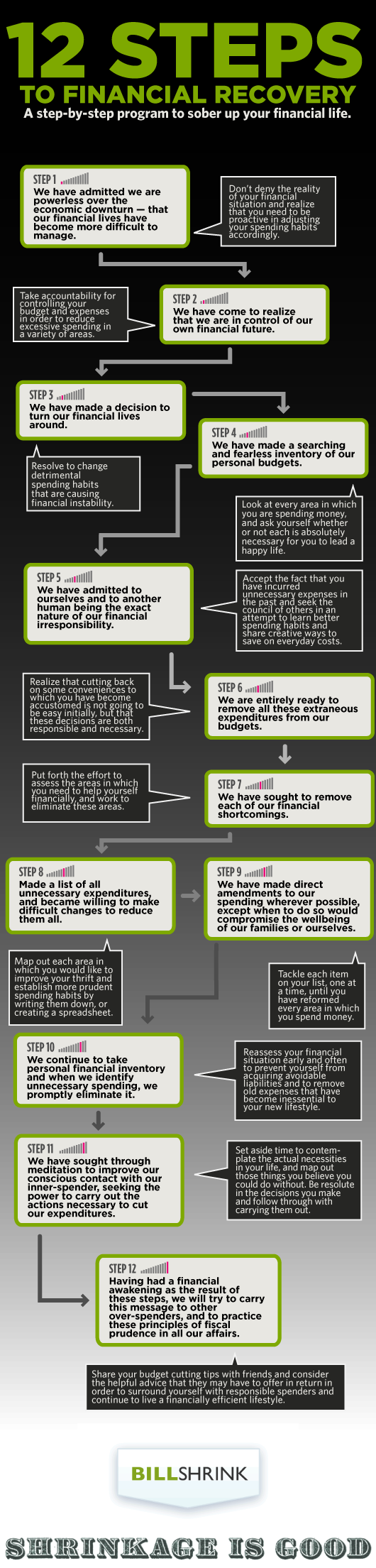
Most financial advice begins with a spreadsheet. It assumes that if you simply track your income and expenses with enough precision, the solution will reveal itself. However, for a significant number of individuals, the problem is not a lack of data or a failure of basic arithmetic. It is a loss of control. This perspective shifts the narrative of financial struggle from a technical error to a behavioral addiction, one that mirrors the compulsive loops seen in substance abuse. The framework in question proposes a twelve-step program for financial recovery, explicitly modeled after the methodology of Alcoholics Anonymous. It posits that sustainable fiscal health requires more than willpower; it demands a fundamental shift in how an individual relates to their spending impulses.
The Admission of Powerlessness
The foundation of this approach is the admission of powerlessness. In the context of addiction recovery, this is a pivotal moment of humility. It acknowledges that the individual cannot simply “will” their way out of a chaotic spending pattern. The program suggests that financial habits can become so entrenched that they resist rational management. By framing the issue as a loss of agency, the framework removes the shame often associated with debt and replaces it with a clinical, behavioral diagnosis. This is not about blaming the individual for being “bad with money,” but about recognizing that the spending behavior has become a compulsive loop that requires a structured intervention to break.
The Fearless Inventory
Once the admission is made, the process moves to what the text calls a “searching and fearless inventory.” This is not a casual review of bank statements. It is a rigorous, comprehensive audit of every area of spending. The goal is to distinguish sharply between necessary and extraneous expenses. This binary classification is central to the program. It requires a disciplined evaluation of what constitutes a true need versus a convenience or an impulse. The text emphasizes that this inventory must be conducted with honesty, not just toward oneself, but toward another human being. This introduction of social accountability is a key mechanism. By confessing financial irresponsibility to a peer, the individual externalizes the problem. It creates a support structure that makes it harder to revert to old habits, as the act of spending becomes a breach of trust with a community member rather than just a private lapse in judgment.
Meditation and the Inner Spender
One of the most distinctive elements of this financial framework is the inclusion of meditation. This step suggests that financial discipline has a significant psychological dimension that requires contemplative practice. The text refers to improving “conscious contact” with an “inner spender.” This implies that the root of financial failure is often an internal behavioral loop that must be identified through introspection. By engaging in regular meditation, the individual aims to create a pause between the impulse to spend and the action of spending. This positions financial discipline as a mindfulness exercise, where the goal is to observe the urge without automatically acting on it. While the text does not provide empirical data to support the specific efficacy of meditation in this context, it highlights the importance of awareness in breaking compulsive cycles.
Systematic Amendment and Continuous Care
Recovery in this model is not a one-time event. It is a continuous process of self-correction. The program emphasizes “direct amendments,” which are immediate changes made to address identified faults, and “continuous inventory,” which is the ongoing monitoring of one’s financial behavior. The user is instructed to tackle expenditures one at a time, mapping improvements and systematically cutting back on items deemed unnecessary. This methodical approach prevents the overwhelm that often leads to abandonment of financial plans. The final step involves sharing the message with other “overspenders.” This reinforces the community aspect of the recovery model, suggesting that helping others solidifies one’s own commitment to fiscal prudence.
Limitations and Context
While this framework offers a compelling behavioral structure, it has notable limitations. It is a generic behavioral guide that lacks specific financial metrics. It does not address interest rate considerations, debt consolidation strategies, investment planning, or tax implications. For individuals with complex financial structures, this program may be insufficient as a standalone plan. Furthermore, the heavy reliance on the AA metaphor may not resonate with everyone. Those whose financial struggles stem from structural issues, such as systemic poverty, job loss, or medical debt, may find the “powerlessness” framing unhelpful or even stigmatizing. The distinction between “necessary” and “unnecessary” spending is also highly subjective and varies significantly based on individual circumstances and cultural norms. Therefore, this behavioral framework should be viewed as a supplement to, not a replacement for, professional financial guidance. It addresses the psychological and behavioral roots of spending, but it does not replace the technical expertise required for complex financial planning.