Challenging the Default Assumption
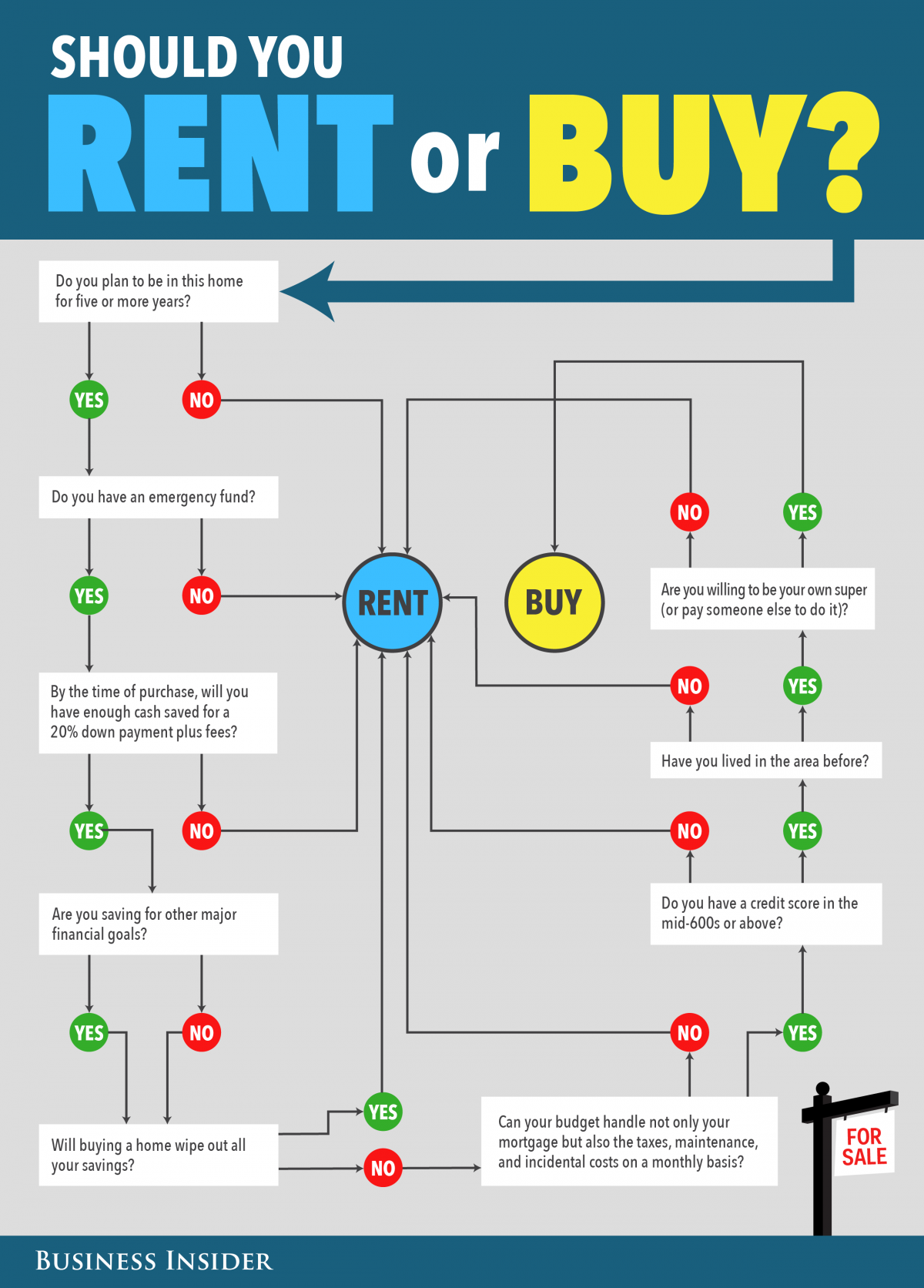
For decades, the narrative surrounding housing has been dominated by a single, powerful cultural script: buying a home is the ultimate marker of financial maturity. Renting, by contrast, is often framed as a temporary state or a failure to achieve the American Dream. However, recent consumer finance literature proposes a more nuanced perspective. A structured decision-making tool, originally popularized by Business Insider, challenges this assumption by treating homeownership not as a universal good, but as a specific financial strategy that requires precise conditions to succeed.
This framework operates as a preliminary heuristic, a binary filter designed to screen out candidates who are financially unprepared for the complexities of ownership. It is not a comprehensive financial model that calculates every variable in the housing market. Instead, it serves as a gatekeeping mechanism. The core argument is that if an individual fails to meet specific baseline criteria regarding liquidity, time horizon, and responsibility, the financial risks of buying outweigh the potential benefits. In such cases, renting is not a defeat; it is a prudent, strategic choice.
The Hidden Costs of Ownership
A central thesis of this approach is the rejection of the idea that a mortgage payment represents the total cost of housing. Many prospective buyers focus exclusively on the visible monthly loan payment, ignoring the broader financial burden of ownership. The framework explicitly distinguishes between the loan and the total cost of ownership, which includes property taxes, insurance, and maintenance.
By highlighting this distinction, the tool warns against the “house poor” scenario. In this situation, high housing costs crowd out other financial goals, leaving the homeowner with little disposable income. The framework argues that buying is only a rational financial move if the buyer can sustain these total costs without compromising their financial safety net. It shifts the perspective from the intrinsic value of real estate to the individual’s capacity to absorb the hidden costs and rigidities of ownership.
Liquidity and the Emergency Fund
The most critical variable in this framework is financial liquidity. The tool warns against the common pitfall of depleting liquid assets to secure real estate. It prompts the reader to assess whether purchasing a home would wipe out all their savings. This warning is vital because it highlights the vulnerability of homeowners who have converted their liquid emergency funds into illiquid equity.
In the event of a job loss or a major repair, a homeowner with no cash reserves is in a precarious position. They are locked into a fixed asset that cannot be easily liquidated to cover immediate expenses. Conversely, a renter with a robust emergency fund retains flexibility. They can navigate financial shocks without the pressure of maintaining a property that is costing them more than they can afford. The framework suggests that a prospective buyer should have enough cash saved to cover a 20% down payment plus fees. This benchmark is significant because a 20% down payment typically allows a buyer to avoid Private Mortgage Insurance (PMI), which adds to the monthly cost. However, the framework’s insistence on this level of capital may exclude individuals who are otherwise financially stable but lack the specific capital for a large down payment.
The Five-Year Rule and Time Horizon
Another central concept is the time horizon, often summarized by the “five-year rule.” The framework suggests that if an individual plans to stay in a home for fewer than five years, the transaction costs of buying and selling may outweigh the benefits of equity accumulation. These costs include closing fees, agent commissions, and potential capital gains implications.
This time horizon is a critical variable because it determines whether the buyer can amortize the upfront costs of entry and exit. If a person intends to move frequently, the friction of the housing market can erode any financial gains from ownership. The framework uses this rule to filter out those who view a home as a short-term investment rather than a long-term residence. It is important to note that this is a generalization. The break-even point for buying versus renting depends on local transaction costs, property tax rates, and expected appreciation. In some markets, the break-even point may be shorter or longer than five years, but the rule serves as a useful initial benchmark for assessing commitment.
Being Your Own Super
Beyond the numbers, the framework introduces a lifestyle factor: the metaphor of being “your own super.” This phrase encapsulates the shift in responsibility from a property management company to the individual homeowner. Homeowners must assume the roles of property manager, maintenance worker, and project manager.
This responsibility is identified as a significant lifestyle factor that may not suit everyone. For individuals who value their free time or lack the skills to handle home repairs, the “super” role can become a source of stress and unexpected expense. The framework prompts readers to ask if they are prepared to handle all maintenance and repairs themselves, or if they are willing to pay for them. If the answer is no, the balance tilts toward renting. This aspect of the framework acknowledges that financial readiness is not just about money; it is about the willingness to manage the physical and administrative burdens of a property.
Limitations and Market Dynamics
While the binary filter provides a useful starting point, it has significant limitations that must be acknowledged. First, it simplifies market dynamics. The framework does not account for local rent-to-price ratios, which vary significantly by location. In some markets, renting may be more expensive than the monthly cost of ownership, even for short-term stays. Conversely, in other markets, buying may be prohibitively expensive relative to income. The binary approach does not capture these nuances.
Second, the framework does not address the impact of interest rate fluctuations on the total cost of ownership. A change in interest rates can significantly alter the affordability of a mortgage, making a previously viable purchase unaffordable, or vice versa. Third, it presents a binary choice without fully addressing the potential for equity appreciation. In a rising market, the value of a home can increase significantly, potentially offsetting the costs of ownership and making a shorter time horizon more viable. The framework’s focus on transaction costs may undervalue the potential for capital gains.
Finally, the source of this framework is a media outlet rather than a financial advisory firm. While the advice is general in nature, it may lack the depth and nuance provided by a certified financial planner. The framework is a general guide, not a substitute for professional advice. Individuals should supplement this tool with personalized financial advice and a thorough analysis of their local housing market to make an informed decision.