The Dilution of Impact
In the pursuit of clear and compelling writing, few habits are as pervasive yet as damaging as the overuse of the word “very.” This small, unassuming intensifier acts as a diluent in language. It reduces the impact of a sentence by relying on auxiliary words to convey degree rather than defining it. When a writer says something is “very old,” they are approximating a state. They are asking the reader to imagine a level of age without providing a concrete image. The result is prose that feels flat, generic, and lacking in texture.
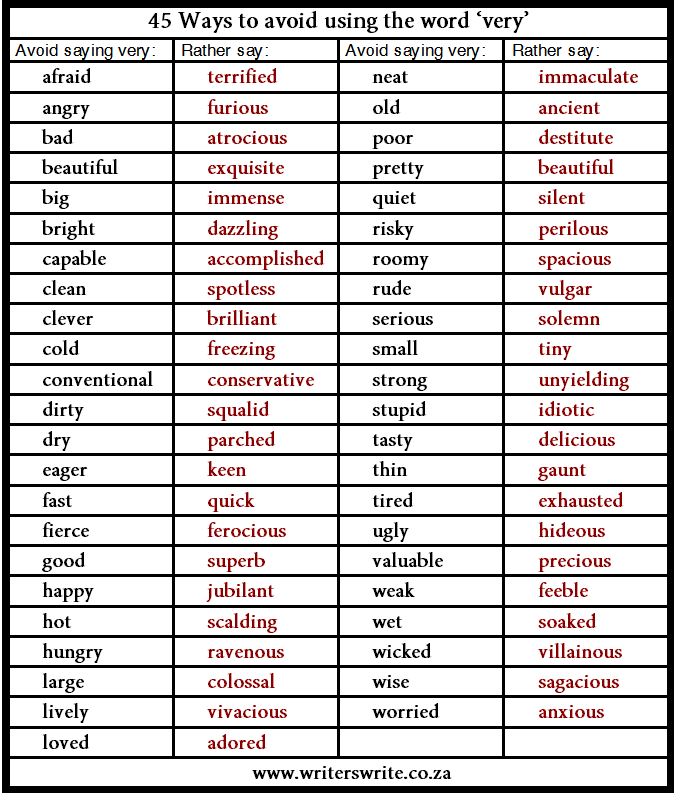
The solution lies in lexical precision. By eliminating the weak modifier and selecting a single, potent adjective, a writer can achieve greater economy and clarity. This technique is not merely a rule of grammar; it is a method for elevating prose through careful word selection. The goal is to shift the focus from a generic degree of a state to a distinct quality. Instead of telling the reader that something is “very bad,” a writer can describe it as “atrocious.” Instead of noting that a person is “very hungry,” they can describe them as “ravenous.” These substitutions move the description from a vague approximation to a concrete image, engaging the reader’s imagination more effectively.
Specificity Over Generality
The core mechanism of this stylistic improvement is the shift from generality to specificity. General adjectives like “good,” “bad,” “big,” or “old” are broad categories. They cover a vast range of possibilities. When modified by “very,” they become even less precise, as the degree of intensity is left to the reader’s interpretation. Strong adjectives, however, carry specific connotations and historical weights that narrow the focus.
Consider the difference between “very clean” and “immaculate.” The former suggests a high level of cleanliness, but the latter implies a state of perfection, almost sacred in its purity. Similarly, “very old” becomes “ancient.” The word “ancient” does not just indicate age; it conveys a sense of historical weight, durability, and timelessness. These words do more than describe; they evoke. They provide the reader with a specific sensory or emotional anchor. This is the essence of vivid imagery. By choosing words that carry inherent intensity, writers can create a more engaging reading experience without the need for repetitive phrasing or weak modifiers.
Expanding the Lexical Range
For many writers, the challenge is not knowing that “very” is weak, but knowing what to replace it with. This is where a curated list of alternatives serves as a valuable educational tool. Such resources introduce less common, high-impact vocabulary that might otherwise remain unused. Terms like “gaunt,” “parched,” “vulgar,” and “vivacious” enhance the texture of prose by offering distinct shades of meaning.
Using these words is also a form of vocabulary expansion. When a writer integrates less common terms into their work, they broaden their lexical range. This diversity prevents the monotony that often plagues repetitive writing. For example, instead of repeatedly using “very tired,” a writer might alternate between “exhausted,” “weary,” and “spent.” Each of these words carries a slightly different nuance. “Exhausted” suggests a complete depletion of energy, while “weary” implies a longer, more gradual fatigue. By mastering these distinctions, writers can tailor their language to the specific context of their narrative or argument.
The Importance of Contextual Nuance
However, the substitution of strong adjectives for weak ones is not a mechanical process. It requires a deep understanding of context. Not every strong adjective is a direct synonym for its weaker counterpart. Some replacements carry specific connotations that may not fit every situation. For instance, the phrase “very strong” is often paired with “unyielding” in stylistic guides. While “unyielding” is a powerful word, it implies rigidity and inflexibility rather than just physical power. Using “unyielding” to describe a person’s physical strength in a context requiring flexibility would be inaccurate. The word “unyielding” suggests a refusal to bend or change, which is a different quality from raw power.
This distinction is critical. Effective writing requires an awareness of the precise meaning of each replacement word. A writer must consider the tone, the subject, and the intended effect before making a substitution. In some cases, “very” may be the most appropriate word, particularly in informal or conversational writing. The goal is not to eliminate “very” at all costs, but to use it only when no better alternative exists. This approach promotes stylistic awareness. It encourages writers to be mindful of their word choices and to actively seek out more precise alternatives. The result is a more polished and impactful final product.
Practical Applications for Writers
Writers can apply these principles in several practical ways. First, the list of strong adjectives can serve as a quick-reference tool during the editing process. When a draft contains the phrase “very [adjective],” the writer can scan the list for a direct synonym that better captures the intended nuance. This is particularly useful in descriptive writing, where vivid imagery is crucial. By replacing weak modifiers with strong adjectives, writers can enhance the clarity and impact of their descriptions.
Second, the list can serve as a vocabulary exercise. By integrating less common words, writers can enhance the texture of their prose and avoid repetitive phrasing. This can be a valuable practice for writers seeking to improve their lexical diversity. It encourages experimentation and risk-taking in language. Writers can try using new words in different contexts to see how they feel. This practice helps build confidence in using a wider range of vocabulary.
Finally, the guide encourages writers to be more mindful of their word choices. By recognizing “very” as a potential weak point, writers can actively seek out more precise alternatives. This mindset leads to a more polished and impactful final product. It is a shift from passive writing to active crafting. Every word is chosen with intention, and every sentence is refined for maximum effect. This approach not only improves the quality of the writing but also deepens the writer’s understanding of language. It is a journey of continuous improvement, where each substitution brings the prose closer to its full potential.