The Myth of the Perfect Length
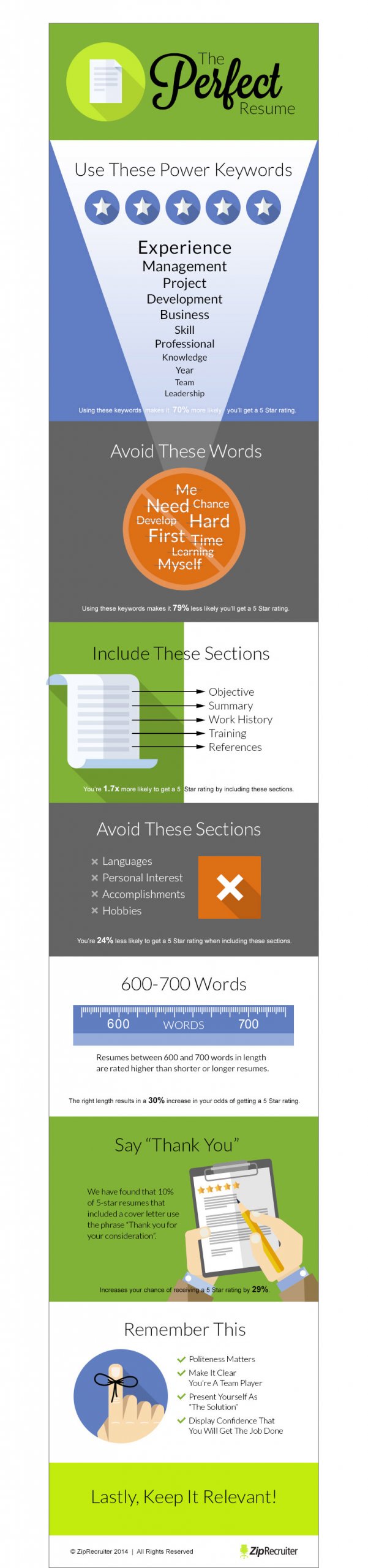
For decades, career advice has treated the resume as a technical document governed by immutable laws. Among the most persistent of these laws is the belief that there is a specific, optimal length for a professional summary. Recent research notes suggest that documents falling within a range of 600 to 700 words are rated higher by evaluators than those that are either too short or excessively long. This concept aligns with a “Goldilocks” principle in hiring: the resume must be detailed enough to demonstrate competence but concise enough to respect the evaluator’s time.
However, treating this word count as a universal constant is risky. The source material presents this range as a determinant of evaluation outcomes, implying that adherence creates a measurable advantage. Yet, hiring practices have evolved significantly. Modern recruiters often scan documents in seconds, prioritizing scannability over density. A 700-word block of text may be viewed as dense and difficult to parse, whereas a well-structured document with bullet points might convey the same information more effectively in fewer words. The limitation here is clear: the specific numerical target may reflect a particular, perhaps older, hiring context rather than a universal current standard. Applicants should view word count as a guideline for brevity, not a rigid constraint that overrides clarity.
Structure and the Exclusion of Self
The guidelines advocate for a standardized hierarchy that prioritizes specific sections: Objective, Summary, Work History, Training, and References. This structure places the candidate’s intent and background at the forefront, followed by verifiable experience. Conversely, the text explicitly advises against including subjective or extraneous elements. Sections such as Languages, Personal Interests, Accomplishments, and Hobbies are flagged for exclusion.
This directive tone emphasizes the elimination of personal flair in favor of a rigid, professional presentation. The exclusion of “Accomplishments” is particularly notable and contradicts many contemporary hiring standards that prioritize achievement-based statements. In modern recruitment, results and impact are often more valuable than a list of duties. If a candidate excludes their accomplishments, they risk presenting a resume that lists responsibilities without demonstrating value. This suggests that the advice may be context-specific, reflecting a hiring environment where job duties were considered more relevant than specific outcomes. Today, a resume that lacks quantifiable achievements may be perceived as lacking substance, regardless of its structural conformity.
The Power of Precise Language
Linguistic precision is a critical component of the guide. The author promotes the use of “power keywords” to enhance professional impact. Recommended vocabulary includes terms such as Experience, Management, Project, Development, Business, Skill, Professional, Knowledge, Year, and Team. These words are chosen for their association with corporate functionality and measurable contribution.
In contrast, the text warns against using weak or personal descriptors, specifically flagging words like “Hard” and “Myself.” This implies that first-person pronouns and vague adjectives dilute the resume’s authority. Applicants are encouraged to replace passive or personal phrasing with strong, action-oriented verbs. For instance, a candidate might replace “I was responsible for managing a team” with “Managed a team,” thereby eliminating the first-person pronoun and using a strong action verb. This shift creates a document that reads as an objective statement of professional capability rather than a personal narrative.
While avoiding first-person pronouns is generally accepted in modern resume writing, the specific vocabulary recommended may be outdated. The list of “power keywords” is broad and generic. In specialized fields, industry-specific terminology often carries more weight than generic corporate buzzwords. A data scientist, for example, would benefit more from mentioning specific tools and methodologies than from repeating the word “Professional.” The goal remains the same: to create a document that projects authority. However, the method must be adapted to the specific role and industry.
Politeness in Professional Correspondence
Beyond the resume itself, the notes address the cover letter, highlighting the importance of politeness. The author asserts that including the phrase “Thank You” in cover letters influences hiring outcomes positively. While the specific statistical data supporting this claim is partially illegible in the source material, the underlying principle is that courtesy is a measurable factor in applicant evaluation.
This suggests that the hiring process is not solely a technical assessment of skills but also a social interaction where basic professional etiquette plays a role. A cover letter that concludes with a clear expression of gratitude aligns with professional norms and demonstrates respect for the reader’s time. This aspect of the guidelines is less controversial and more universally applicable. Regardless of the era, professional courtesy is a baseline expectation in business communication. The specific phrasing may vary, but the intent to be polite and respectful remains a constant in effective correspondence.
Applying the Guidelines with Caution
The practical application of these guidelines involves a systematic audit of existing documents. Applicants should first verify their word count, aiming for brevity and clarity. This requires a disciplined editing process to remove redundant details and ensure that every word contributes to the professional narrative. Next, they must streamline the document by removing prohibited sections such as hobbies and personal interests, ensuring that the resume remains focused on professional relevance.
Finally, a linguistic review should be conducted to replace weak language with strong, action-oriented verbs and to ensure a polite closing in all accompanying correspondence. However, these steps should be taken with an awareness of the limitations in the source material. The notes contain typographical errors and illegible characters, which obscure specific data points. The lack of attribution and the counterintuitive exclusion of accomplishments suggest that these findings should be applied with caution. The core emphasis on conciseness, keyword optimization, and professional tone remains relevant, but the specific guidelines should be adapted to current hiring standards. By balancing the structural discipline of the guidelines with the flexibility required by modern recruitment, applicants can create a resume that is both professionally rigorous and effectively tailored to their specific career goals.